Are Tree Trimming and Tree Pruning the Same Thing?
Homeowners frequently ask whether tree trimming and tree pruning are identical services or distinct procedures. The simple answer is that the terminology often overlaps in casual conversation, but they emphasize different aspects of tree care.
In formal arboricultural literature—such as industry-consensus standards codified in ANSI A300—"pruning" is the primary technical term used to describe the selective removal of plant parts to achieve defined management goals. Industry performance standards do not establish a separate technical classification for "tree trimming." Educational resources, such as those from Utah State University Extension, note that "pruning" is preferred in professional practice because it denotes purposeful, biologically grounded branch removal rather than imprecise cutting.
At the same time, "tree trimming" remains a universally understood trade and homeowner descriptor. Property owners commonly use "trimming" when describing branch reduction for roofline clearance, managing yard space, or maintaining landscape appearance. Understanding both everyday usage and technical terminology helps you communicate your specific goals when consulting with a residential tree care team.
What Does Tree Pruning Mean?
In professional arboriculture and horticulture, tree pruning is defined as the selective removal of specific branches, stems, or roots to achieve clear structural, safety, or clearance objectives. Rather than cutting indiscriminately, selective pruning focuses on how the tree will respond biologically to each cut.
Key aspects of selective tree pruning include:
- Targeted Branch Selection: Rather than shearing outer growth, pruning identifies specific branches within the tree, such as deadwood, weak limb attachments, or crossing branches.
- Respecting Branch Anatomy: Proper pruning cuts are positioned just outside the branch collar and branch bark ridge. According to the USDA Forest Service, preserving the branch collar allows the tree to naturally compartmentalize the wound and limit internal decay.
- Structural Development: In developing trees, selective pruning encourages a dominant central leader and well-distributed scaffold limbs. In mature trees, it focuses on crown cleaning and weight management on overextended limbs.
To learn more about structural branch care, explore our dedicated residential tree pruning services.
What Do Homeowners Usually Mean by Tree Trimming?
When homeowners request "tree trimming," they are typically describing maintenance tasks centered on space management, boundary clearance, and visual tidiness. While arborists may technically classify many of these operations under pruning objectives (such as crown raising or clearance pruning), "trimming" remains the most common practical phrase used by homeowners.
Common scenarios where homeowners request trimming include:
- Canopy Overgrowth: When branches have grown too close to building walls, siding, gutters, or service lines.
- Clearance Above Surfaces: Elevating lower limbs that obstruct vehicle passage in driveways or impede pedestrians on walkways.
- Sunlight and Yard Space: Managing dense outer branch growth to allow more filtered light to reach lawns, gardens, or patio areas below.
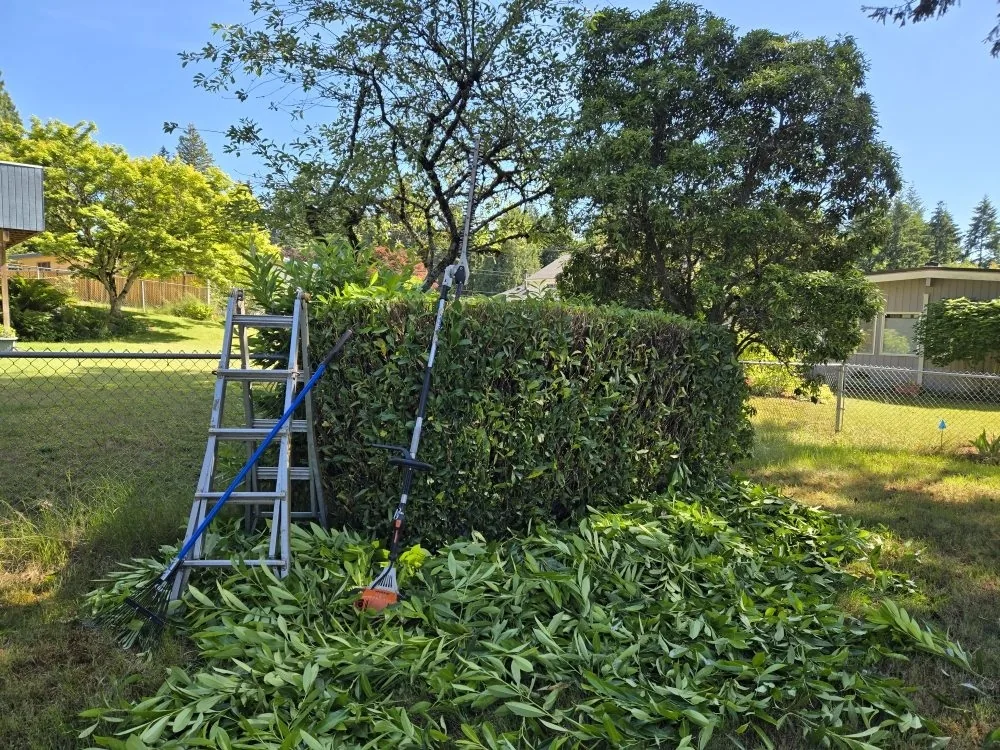
- Hedge and Border Maintenance: Managing seasonal growth on landscape hedges and border trees to maintain clean property boundaries.
For comprehensive branch management solutions, visit our residential tree trimming service page.
Common Reasons Homeowners Request Branch Trimming
Branch trimming is commonly requested as part of routine residential upkeep. As trees mature, outer branches naturally extend outward and downward, creating practical space conflicts around homes.
Homeowners frequently schedule trimming to address:
- Roof and Structure Clearance: Overhanging branches can drop leaves and debris into gutters or scrape against roof surfaces during windy conditions. Trimming helps establish a clear buffer zone around the home.
- Driveway and Walkway Access: Low-hanging limbs can obstruct vehicles or pedestrian sightlines. Elevating lower limbs restores safe, convenient access.
- Property Boundary Maintenance: Limbs extending across fence lines into neighboring yards or alleyways often require trimming to maintain clear boundaries.
Common Reasons for Selective Tree Pruning
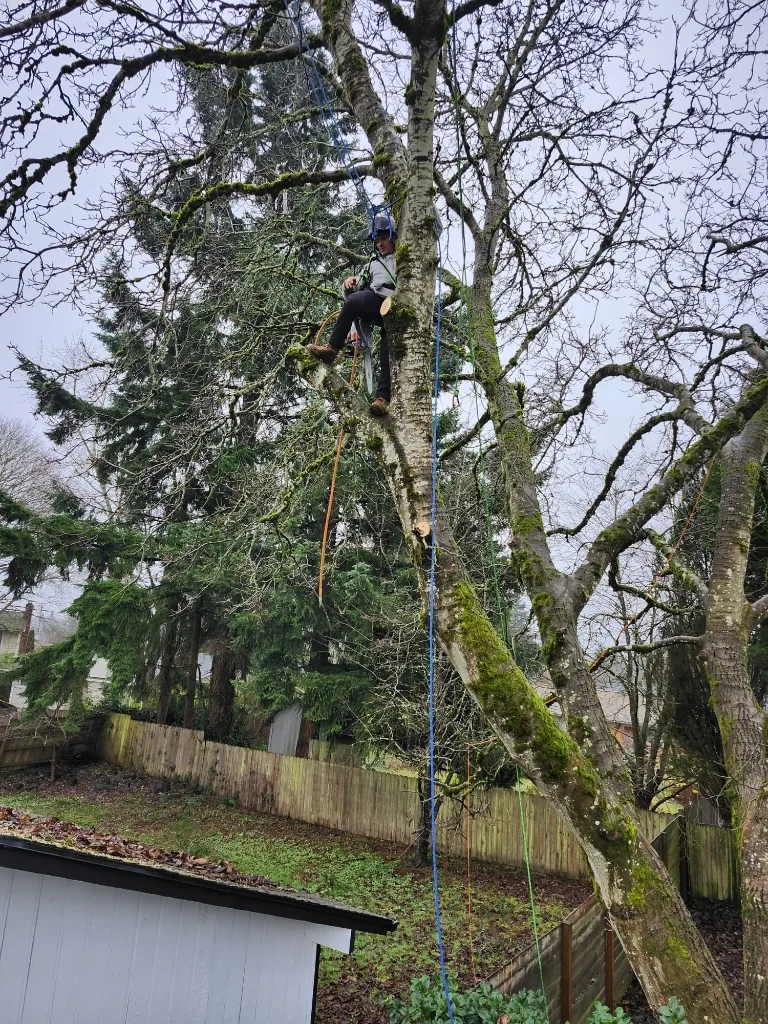
While trimming requests are often driven by property boundaries, selective tree pruning is typically motivated by the structural arrangement and condition of the tree's internal branch network.
Authoritative extension resources identify several primary reasons for selective pruning:
- Removing Dead or Damaged Branches: Deadwood within a canopy becomes brittle over time and can drop unpredictably. Selectively removing dead or damaged limbs removes material that poses a risk of falling.
- Addressing Crossing and Rubbing Branches: When two branches grow against one another, their constant friction wears away protective bark. Pruning removes one of the competing limbs to reduce continuous bark damage.
- Managing Co-Dominant Stems: When a tree develops competing main stems with tight, V-shaped crotches, selective pruning during earlier growth stages helps subordinate one stem to encourage a single dominant trunk.
- Canopy Weight Reduction: In mature canopies with excessively heavy, extended limbs, selective branch removal reduces mechanical leverage on vulnerable limb attachments.
Tree Trimming vs. Tree Pruning: Quick Comparison
The following table illustrates how homeowners and tree care professionals typically conceptualize these terms. In practice, these activities frequently overlap during a residential tree project:
| Maintenance Consideration | Tree Trimming (Common Homeowner / Commercial Usage) |
Tree Pruning (Technical Selective Branch Care) |
|---|---|---|
| Terminology Context | Commonly understood trade and homeowner descriptor for managing clearance, overgrowth, or appearance. | Recognized technical term across arboricultural and horticultural standards (e.g., ANSI A300). |
| Typical Objective | Managing branch size, property clearance, appearance, or boundary encroachment. | Selective branch removal for defined objectives such as structure, dead or damaged branches, or clearance. |
| Typical Property Concern | Overgrown branches extending toward roofs, siding, driveways, or obstructing light. | Dead, broken, crossing, rubbing, or structurally compromised branches within the canopy. |
| Scope & Approach | Commonly describes branch work requested to manage overgrowth, appearance, or property clearance. | Selectively removes specific limbs back to the branch collar or lateral branch with consideration of branch architecture. |
| Industry Framework | Widely used commercial descriptor; not defined as a separate ANSI technical category. | Formally codified in arboricultural standards (ANSI A300 Part 1) and university extension resources. |
Why Cutting Technique Matters
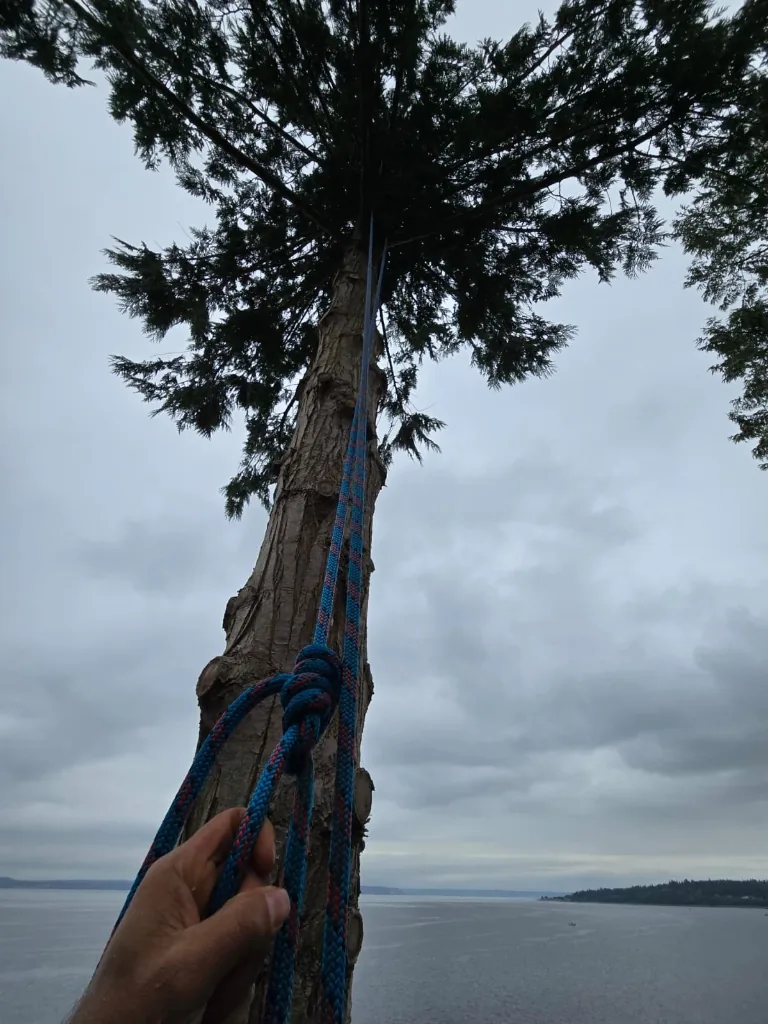
Regardless of whether work is described as trimming or pruning, the physical technique used to remove branches is critical to how the tree responds. Research published by the USDA Forest Service and university extension programs emphasizes that trees do not heal damaged tissue like animals; instead, they compartmentalize wounds by producing chemical barriers and growing calloused wound wood around the cut.
Key technical considerations include:
- Preserving the Branch Collar: The swollen collar at the base of a branch contains specialized cells that facilitate wound closure. Flush cuts that remove the collar, or stub cuts that leave long dead pegs, interfere with natural wound sealing and can invite decay.
- Avoiding Indiscriminate Heading Cuts: Cutting branches at arbitrary lengths rather than back to a natural junction stimulates dense clusters of weakly attached, rapid sprout growth (water sprouts).
- Avoiding Tree Topping: Drastically cutting off the upper canopy of a mature tree—sometimes mistakenly called "topping" or severe trimming—removes vital foliage, exposes large limbs to decay, and leads to hazardous regrowth.
How Can Homeowners Decide What Type of Tree Work to Request?
When contacting a tree care contractor, homeowners do not need to worry about using exact technical terminology. What is most helpful is clearly communicating what you observe on your property and what goals you want to accomplish.
Consider these questions before scheduling an on-site consultation:
- Are branches physically interfering with structures? If limbs are close to your roof, siding, chimney, or driveway, mention the need for structural clearance.
- Do you see dead, broken, or hanging limbs? Point out any visibly dry, leafless, or cracked branches that may require selective deadwood removal.
- Is the canopy blocking light or appearing overly crowded? Discuss selective thinning to improve sunlight penetration and air circulation.
- Are you planning construction or fence installation? Request an on-site discussion regarding branches and roots near planned work areas.
An experienced tree service crew can evaluate your trees in person, explain the appropriate approach, and provide a clear written work scope.
Key Takeaways for Homeowners
- Terminology Overlaps: "Trimming" is widely used by homeowners for clearance and aesthetic management, while "pruning" is the formal technical term for selective branch care.
- Focus on Objectives: Trimming addresses external space concerns (roofs, driveways, property lines); pruning addresses internal branch structure (deadwood, crossing limbs, weight distribution).
- Quality of Cut Matters: Proper branch removal preserves the branch collar and avoids damaging practices like tree topping.
- Communicate Your Goals: Describe what you want to achieve on your property—whether clearance, deadwood removal, or canopy thinning—and let an experienced crew determine the best cutting method.
Learn More About Tree Trimming and Tree Pruning
If you have questions about trees on your residential property, Just For Trees LLC provides dependable, experienced tree care solutions across Renton and surrounding communities. Explore our core services:
- Residential Tree Trimming Services — Branch clearance, canopy elevation, and property boundary management.
- Structural Tree Pruning Services — Selective branch care, deadwood removal, and canopy maintenance.
- Complete Residential Tree Services — Overview of all tree trimming, pruning, removal, and emergency services.
- Request a Free On-Site Estimate — Schedule an in-person evaluation with our Renton-based team.
- USDA Forest Service: How to Prune Trees (NA-FR-01-95) by Peter J. Bedker, Joseph G. O'Brien, and Manfred E. Mielke. Principles of selective branch removal, collar preservation, and tree wound compartmentalization.
- Utah State University Extension: Pruning Landscape Trees: An Overview. Research on purposeful selective pruning terminology, branch biology, and avoiding improper cutting practices.
- Washington State University (WSU) Extension: Home Pruning: Reasons to Prune Trees and Shrubs (FS182E). Educational guidance on landscape branch management objectives and cut placement (Archived Publication).
Need Practical Advice on Trimming or Pruning Your Trees?
Just For Trees LLC brings over 12+ years of residential experience to every project. We provide 100% free on-site evaluations with straightforward pricing and owner-guaranteed satisfaction.