What to Do Immediately When a Tree Falls on Your Property: Step-by-Step Safety Guide
When a tree falls on your property, keep all people and pets away from the area first. Check for downed power lines, fires, or structural impacts only from a safe vantage point. If electrical wires are involved, stay clear and immediately contact your serving electric utility and/or 911 according to official guidance. Avoid entering visibly damaged structures, and contact a tree service for removal once immediate hazards are secured.
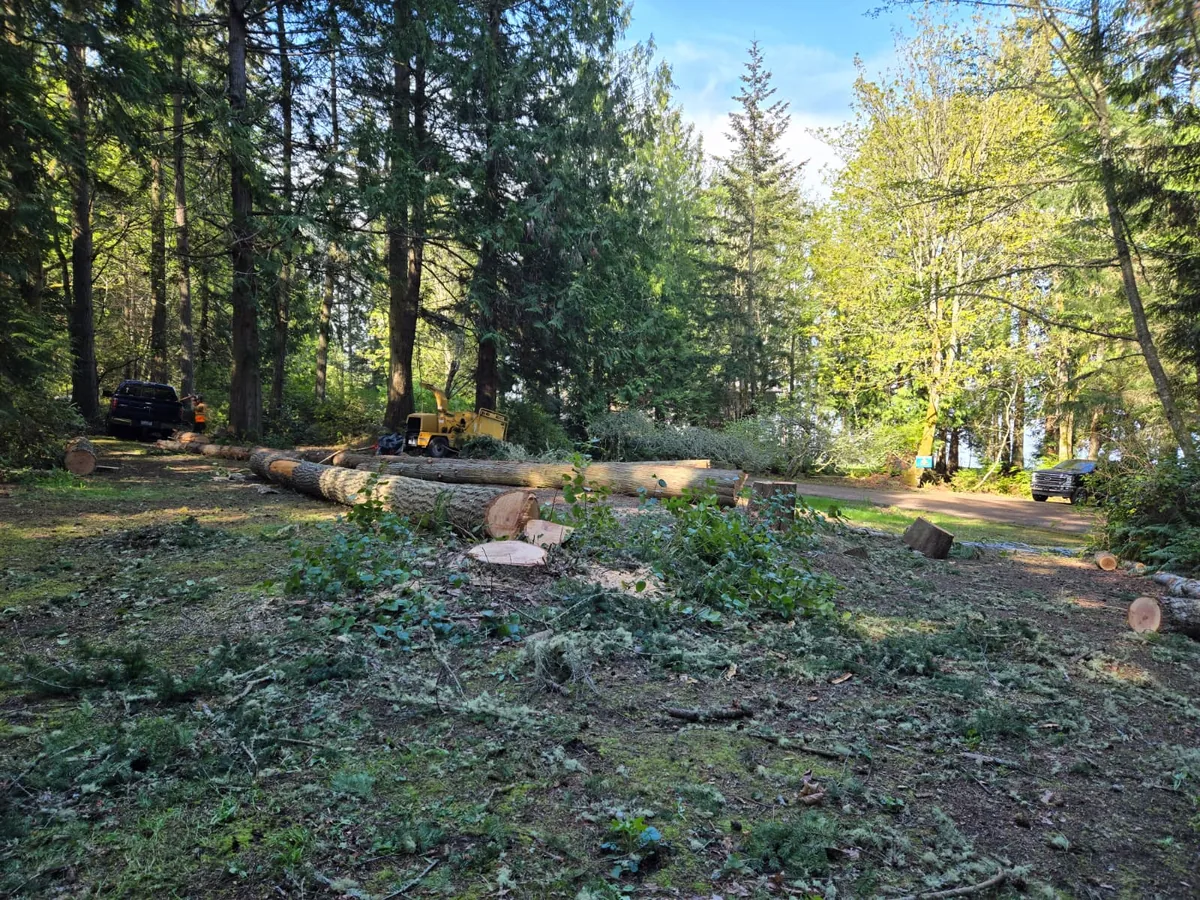
Cut tree sections on a residential property during post-failure tree management.
A sudden tree failure can be a startling and overwhelming experience for any property owner. Whether a large conifer is uprooted during severe winter weather or a heavy hardwood limb fractures without warning, knowing what steps to take—and in what specific order—is essential for protecting life and property.
In any fallen tree situation, public safety agencies and emergency responders emphasize a clear operating principle: people come first, utility and structural hazards come second, and tree removal takes place only after immediate hazards have been addressed. This guide walks through the step-by-step safety actions every homeowner should take immediately following a tree collapse.
Step 1: Keep People and Pets Away From the Fallen Tree
The very first action after a tree falls is to ensure everyone in your household—including family members, tenants, neighbors, and pets—remains at a safe distance from the fallen material.
Fallen trees and broken canopies often look static, but they frequently harbor hidden physical instability. Heavy trunk sections may be balanced precariously on remaining branches, or broken limbs suspended high above may dislodge minutes after the main impact.
- Secure children and pets indoors: Keep curious pets and family members away from the impact zone, root plate, or yard debris.
- Do not climb or walk across fallen trunks: Stepping on supported logs can cause unexpected shifting, rolling, or branch breakage.
- Observe only from a secure vantage point: Conduct any initial visual check from stable ground, well outside the tree's potential reach.
Step 2: Check for Power Lines and Electrical Hazards
Electrical contact represents the single most dangerous hazard associated with fallen trees. Whenever a tree falls near overhead utility infrastructure, you must assume that all downed wires, sagging lines, and objects in contact with electrical equipment may be energized and lethal.
Tree trunks and branches are effective electrical conductors, especially when wet from rain or snow. Furthermore, chain-link fences, metal gates, outbuildings, and vehicles touching downed wires can become energized across significant distances.
Critical Electrical Safety Rule
Never touch, pull, or attempt to move branches, wires, fences, or vehicles that are contacting or near utility lines. Electricity can travel invisibly through the soil and surrounding wet materials.
Understanding Regional Utility Safety Distances (PSE & Seattle City Light)
Different electric utilities specify precise minimum distances that the public must maintain from downed electrical infrastructure. When assessing an incident in the Puget Sound region, always follow the safety instructions established by your specific serving utility:
- Puget Sound Energy (PSE): Instructs customers to stay at least 35 feet away from downed utility wires—roughly the length of a full-size school bus. Report downed lines immediately by calling 911 or PSE at 1-888-225-5773.
- Seattle City Light: Instructs customers to stay at least 30 feet away from downed power lines and anything touching them, and to call 911 immediately.
Note: Occupational safety standards, such as the OSHA 10-foot rule, are workplace qualification regulations for trained utility employees and do not represent a safe distance for homeowners or the general public.
What to Do If a Wire Falls on an Occupied Vehicle
If a utility wire falls across an occupied car or truck, Puget Sound Energy advises occupants to remain inside the vehicle. The metal frame and rubber tires provide insulation, whereas stepping out onto energized ground can cause fatal electrocution. Call 911 immediately and wait for emergency responders or utility crews to confirm the line is de-energized before exiting. If emergency evacuation is mandatory due to vehicle fire, utility protocols require jumping completely clear without touching the car and ground simultaneously; refer directly to the official PSE electric safety guidelines for detailed instructions.
Step 3: Know When to Call 911
Emergency dispatch systems are designed for immediate life-safety emergencies. Understanding when to dial 911 versus when to contact a utility company or a tree service ensures emergency personnel remain available for critical rescue operations.
- Call 911 immediately if:
- Someone is injured, trapped, or in immediate danger.
- The fallen tree has caused an active fire or severe arcing.
- Downed electrical lines are blocking a public street, sidewalk, or occupied building.
- A heavy tree has severely compromised an occupied structure, creating an imminent collapse risk.
- Do NOT call 911 if:
- A tree has fallen entirely in an open yard without injuries, fires, structural damage, or utility involvement.
- Debris is blocking a private driveway without electrical or life-safety hazards. In these cases, contacting a local tree care provider or non-emergency contact is the appropriate action.
Step 4: If the Tree Hit Your House, Garage, or Roof
When a tree makes direct impact with a residential structure, structural integrity and occupant safety must be evaluated with extreme caution.
If a heavy trunk or large branch has punctured roof decking, cracked wall framing, or compromised interior ceilings, all occupants should evacuate the affected rooms immediately. Remain outside the damaged area until local building officials or qualified structural professionals confirm that the building is safe to enter.
- Do not climb onto a damaged roof: Roof decking may be cracked or weakened beneath shingles. Climbing onto the roof introduces severe fall and collapse risks.
- Do not attempt to pull or cut supported tree sections: Tree material resting against a house distributes substantial weight. Shifting this material can cause further damage to the building or cause the trunk to slide unpredictably.
- Check for gas odor: If an uprooted tree ball or falling limb damages a gas meter or line, evacuate the area immediately and contact your gas utility and 911 from a safe distance outside.
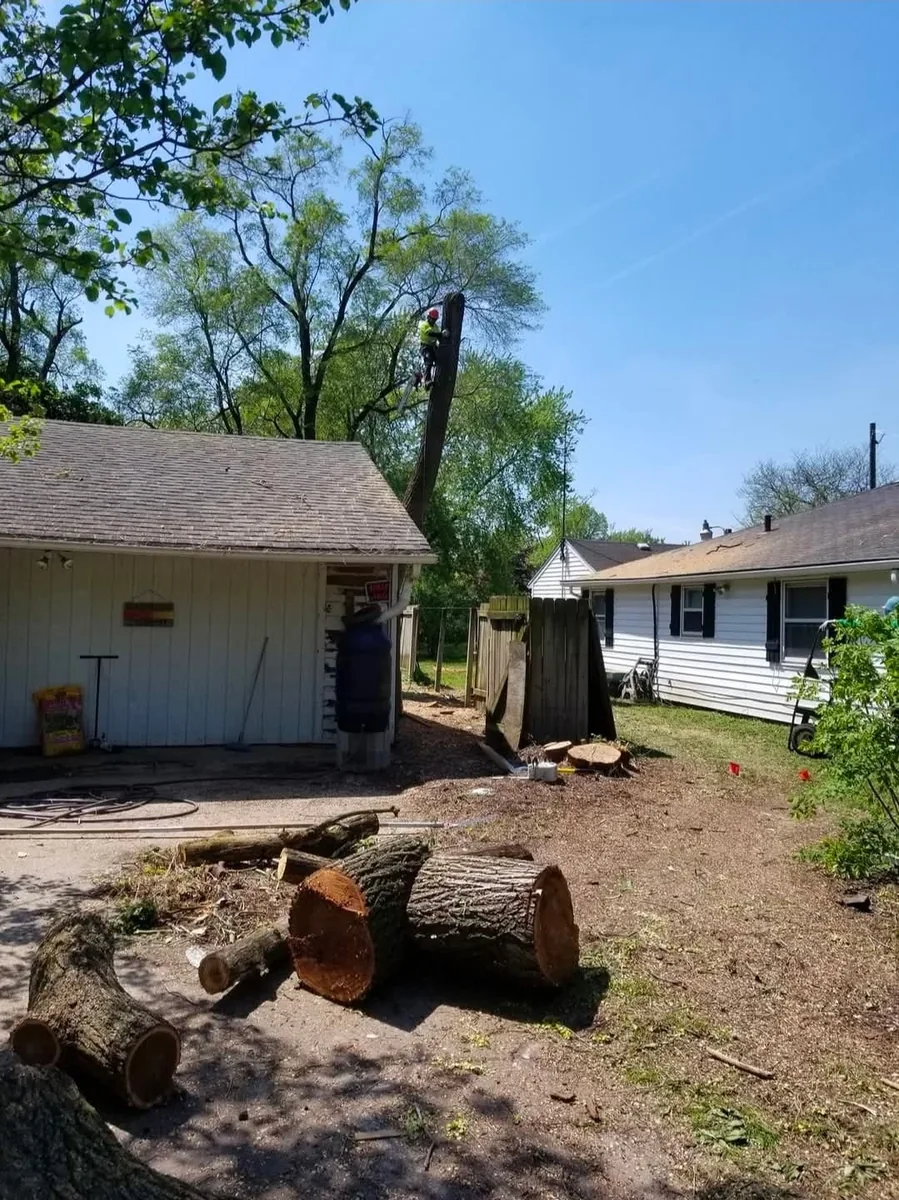
Close-up of exposed wood on a cut or broken tree section, illustrating internal splintering and tension.
Step 5: Do Not Rush Into DIY Chainsaw Work
It is common for property owners to consider clearing fallen trees with personal chainsaws. However, federal workplace safety authorities such as the Occupational Safety and Health Administration (OSHA) identify storm-damaged and fallen trees as some of the most dangerous cutting environments in tree care operations.
Storm-damaged trees differ fundamentally from standing trees because they are subjected to complex, multi-directional physical forces:
- Wood under extreme tension (Spring Poles): Branches pinned beneath heavy trunks store immense mechanical energy. When cut, this stored energy can release instantly, causing the branch to whip outward with dangerous force.
- Unstable root plates: When a partially uprooted tree is severed, the heavy root ball and attached soil mass can suddenly snap back into its hole without warning.
- Chainsaw binding and kickback: Supported logs frequently pinch chainsaw guide bars as cuts are made, increasing the risk of violent rotational kickback toward the operator.
- Suspended broken branches: Damaged hanging limbs trapped in the remaining canopy can dislodge unexpectedly during cutting vibrations.
Because of these complex mechanical risks, homeowners should avoid attempting to cut or dismantle heavy storm-damaged trees themselves.
Step 6: What If the Tree Is Blocking Your Driveway or Access?
A fallen tree blocking a driveway or private walkway can trap vehicles and hinder access. While the desire to clear the path quickly is understandable, safety protocols must still take precedence.
- Inspect the obstruction from a safe vantage point: Verify that no utility wires, low-voltage lines, or gas equipment are tangled beneath the trunk.
- Keep vehicles and pedestrians clear: Do not attempt to drive over branches or push logs with personal vehicles, which can cause vehicle damage or shift unstable wood.
- Contact a tree service for clearing: Professional tree crews can safely dismantle the obstruction and clear vehicle access when included in the approved work scope.
Step 7: Document Property Damage Only When It Is Safe
Once immediate life-safety, electrical, and structural hazards have been addressed, gathering accurate documentation can assist in future insurance communication. The Washington State Office of the Insurance Commissioner recommends documenting property loss following severe weather events.
- Capture clear photos and video: Take wide-angle images showing the entire tree and its relation to structures, fences, or vehicles, as well as close-ups of specific damaged areas.
- Document strictly from safe locations: Never step under hanging branches or climb onto compromised roofs to take photos. Safety always precedes documentation.
- Contact your insurance representative: Reach out to your insurance provider to clarify policy terms, coverage details, and deductible requirements. Avoid making assumptions about neighbor liability or coverage guarantees without consulting your insurer.
Emergency Action Guide: Who Should You Call?
Use this structured decision guide to determine the immediate priority and appropriate contact for common fallen tree situations:
| Situation | Immediate Priority | Appropriate Contact | What to Avoid |
|---|---|---|---|
| Downed power line or tree contacting electrical line | Stay away and keep others away. | Serving electric utility (PSE / City Light) and/or 911 according to utility guidance. | Touching tree, wire, fences, vehicles, or contacting objects. |
| Tree on house with injury, fire, or immediate life threat | Move to safety if possible. | 911 (Emergency Services) | Remaining in visibly unsafe damaged areas. |
| Tree on structure without immediate life-safety emergency | Keep clear of damaged area. | Appropriate property professionals / tree service after immediate hazards are addressed. | Roof climbing or moving supported tree material. |
| Tree blocking driveway without apparent utility hazard | Keep people clear. | Tree Service | Cutting unstable or tensioned material yourself. |
| Broken or suspended branch in canopy | Keep people/vehicles away from below and around the branch. | Tree Service | Standing underneath or risky DIY ladder work. |
| Fallen tree in open yard | Keep children/pets away until stability is understood. | Tree Service if removal is needed. | Assuming trunks or root plates are stable. |
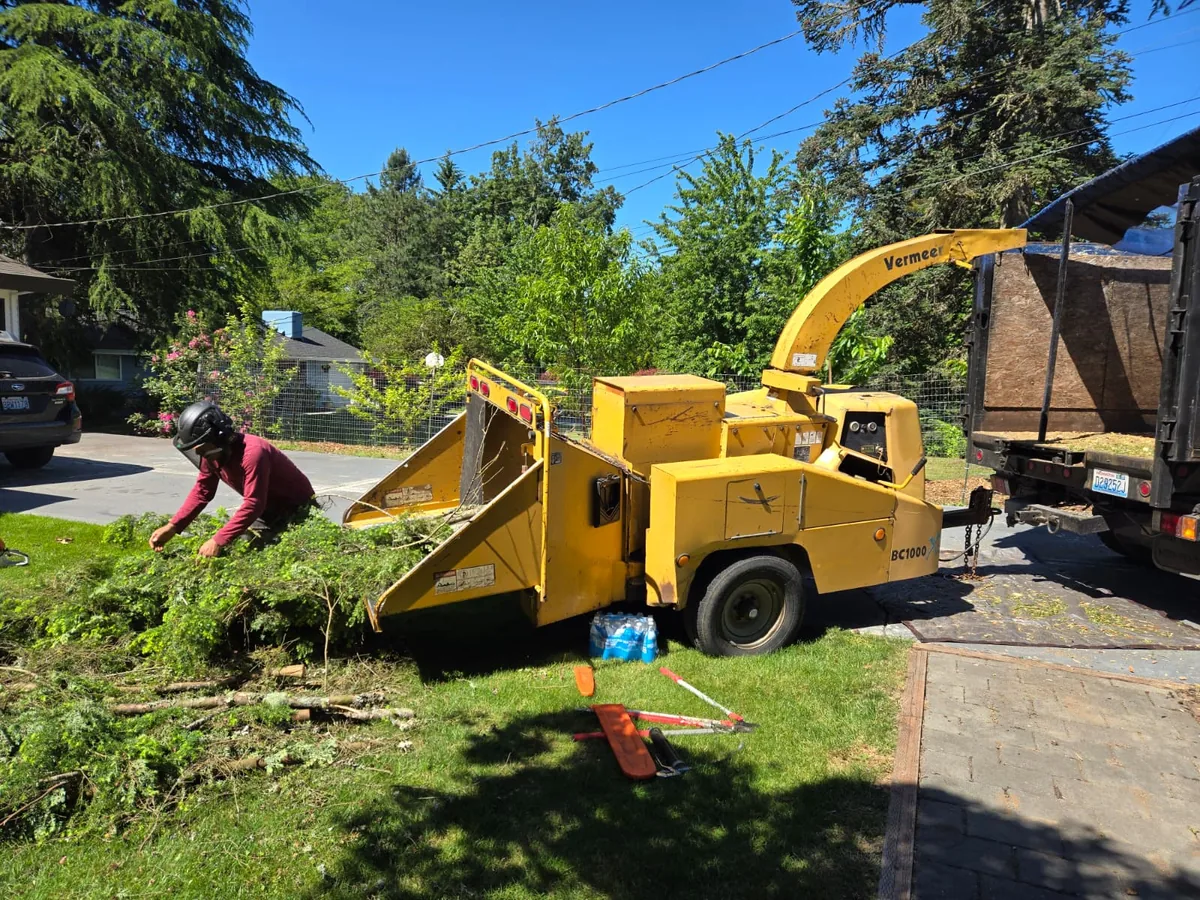
Branches and tree material near a wood chipper on a residential site during property cleanup operations.
Step 8: When to Contact an Emergency Tree Service
After electrical, fire, structural, and life-safety hazards have been handled by the appropriate authorities, property owners can contact a tree service to manage the physical tree material.
Professional tree care crews assist with fallen tree removal, damaged branch removal, and clearing tree material from property access when included in the approved work scope. If routine preventative branch maintenance is needed before storms hit, property owners can also evaluate the differences between branch management techniques in our guide on tree trimming vs. pruning.
For homeowners in Renton and surrounding King County communities, Just For Trees LLC provides dependable 24/7 Emergency Tree Service with free estimates and over 12+ years of experience.
What Information Should You Have Ready When Calling?
When contacting a tree care service for emergency assistance, having key details prepared helps the crew evaluate the situation effectively:
- Property address: Your specific street address and any relevant access instructions (such as narrow driveways or gated entries).
- Location of the tree material: Whether the tree is in the front yard, back yard, resting on a fence, or blocking access.
- Impacted structures: Note whether the tree is in contact with a home, garage, outbuilding, or vehicle.
- Utility line status: Inform the dispatcher whether utility lines appear to be involved (remember to contact the serving electric utility first if lines are contacted).
Important: Obtain this information only from a safe, comfortable ground vantage point. Never approach an unstable tree or hazardous area to inspect details.
Key Safety Takeaways
- Safety Sequence: Always prioritize human life and electrical/fire safety before addressing property damage or tree cleanup.
- Utility Distance: Follow serving utility instructions—Puget Sound Energy specifies staying at least 35 feet from downed wires, while Seattle City Light specifies at least 30 feet.
- 911 Guidelines: Reserve 911 for injuries, active fires, arcing power lines, and imminent collapse emergencies.
- Avoid DIY Cutting: Complex tension, spring poles, and shifting logs make fallen tree cutting hazardous for homeowners.
- Safe Documentation: Photograph property damage only from secure ground positions after immediate hazards are stabilized.
Sources & Emergency Safety Resources
- Puget Sound Energy (PSE): Electric Safety: Downed Power Lines. Available at: https://www.pse.com/en/pages/customer-safety/electric-safety
- Seattle City Light: Outages and Safety: Downed Power Lines. Available at: https://www.seattle.gov/city-light/outages-and-safety/downed-power-lines
- Occupational Safety and Health Administration (OSHA): Tree Care Operations & Storm Cleanup Hazards. Available at: https://www.osha.gov/tree-care
- Ready.gov / FEMA: Severe Weather & Post-Storm Safety Guidance. Available at: https://www.ready.gov/severe-weather
- Washington State Office of the Insurance Commissioner: Homeowners Insurance & Damage Documentation. Available at: https://www.insurance.wa.gov/homeowners-insurance-claims
- King County Emergency Management: Severe Storm Safety & Emergency Response. Available at: https://kingcounty.gov/en/dept/des/emergency-management