How to Prepare for a Residential Tree Service On-Site Estimate
Before an on-site tree service estimate, homeowners can prepare by identifying the specific tree of concern, clarifying their primary goal (such as removal, pruning, or clearance), noting property access conditions, and preparing questions about work scope and debris cleanup. Homeowners do not need to climb, measure, cut branches, or attempt to diagnose tree health before the contractor's visit.
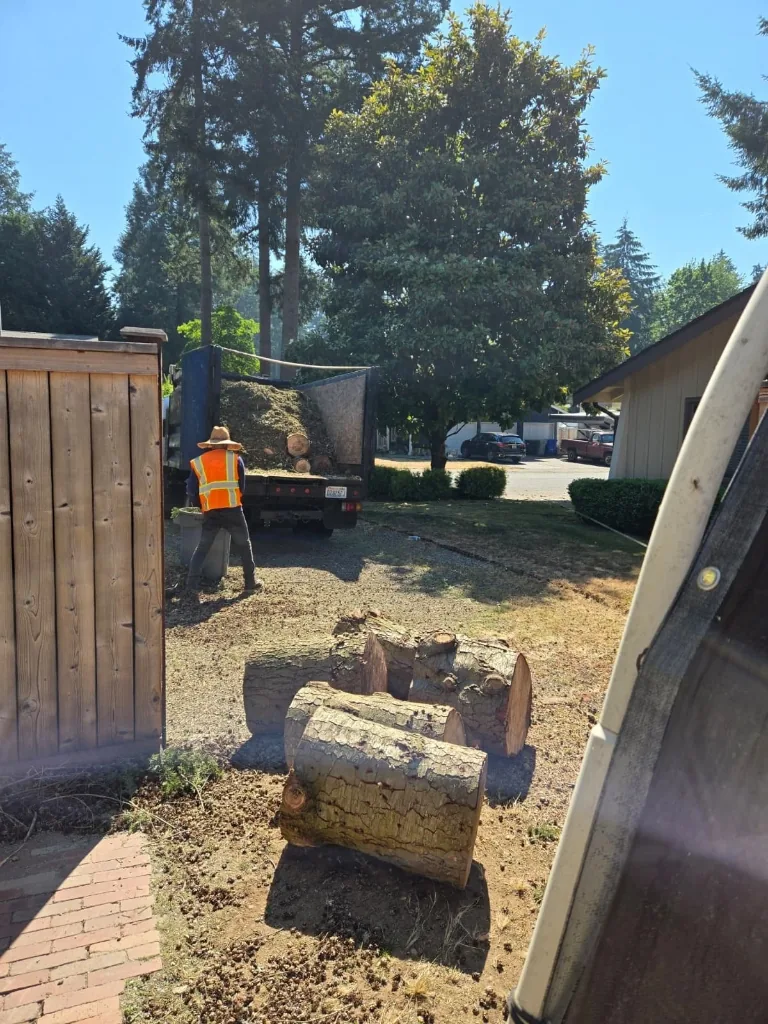
Tree branches and residential yard area during tree service work.
Whether you are planning routine maintenance to improve sunlight, clearing branches away from a roofline, or addressing a compromised tree after a storm, requesting an on-site estimate is usually the first practical step.
An on-site visit allows a tree service contractor to look at the tree in person, understand your property layout, and discuss practical options. Preparing a few basic details ahead of time helps ensure the walk-through is productive and that you receive a clear, accurate proposal for your landscape.
What Happens During an On-Site Tree Service Estimate?
During an on-site estimate, homeowners and tree service professionals walk the property together from ground level. This visit provides an opportunity to discuss:
- The requested tree work: Which trees or branches you would like removed, pruned, trimmed, or cleared.
- Physical location and surrounding environment: The proximity of trees to houses, garages, sheds, fences, driveways, or garden beds.
- Property access and terrain: How crews can enter the work area and navigate gates or yard slopes.
- Available service options: Whether your goals can be achieved through selective pruning or if complete removal is being considered.
- Proposed scope and pricing: The specific tasks included in the project and the estimated cost for the proposed work.
1. Identify the Tree or Area You Want to Discuss
Before the contractor arrives, take a moment to confirm exactly which trees or areas of your yard you want evaluated. On larger residential properties or lots with mature evergreen stands, clearly identifying the tree prevents confusion:
- Note whether you are discussing a single tree, several specific trees, or a wider hedge line.
- Point out the tree's general location (e.g., "the birch near the driveway" or "the fir along the rear fence").
- Identify specific sections of concern, such as low-hanging limbs over a patio or deadwood in the upper canopy.
Note: Homeowners do not need to measure tree height, calculate trunk circumference, or identify exact botanical species before the visit.
2. Clarify What You Want to Accomplish
Having a general idea of your desired outcome helps the contractor recommend appropriate service options:
- Complete Tree Removal: If a tree is severely declining, structurally damaged, or causing unmanageable conflicts, discuss whether complete removal is the intended goal. You can explore common signs that prompt this discussion in our guide to signs a tree may need removal, or view our dedicated tree removal services.
- Branch Clearance & Trimming: If branches are brushing against your roof, siding, or gutters, discuss clearance trimming to establish adequate separation. Learn more about our general tree trimming services.
- Selective Branch Pruning: If you want to remove deadwood, reduce heavy branch weight, or improve light penetration while preserving the tree, ask about selective tree pruning. If you are unsure which approach fits your situation, review the differences in our overview of tree trimming vs. pruning.
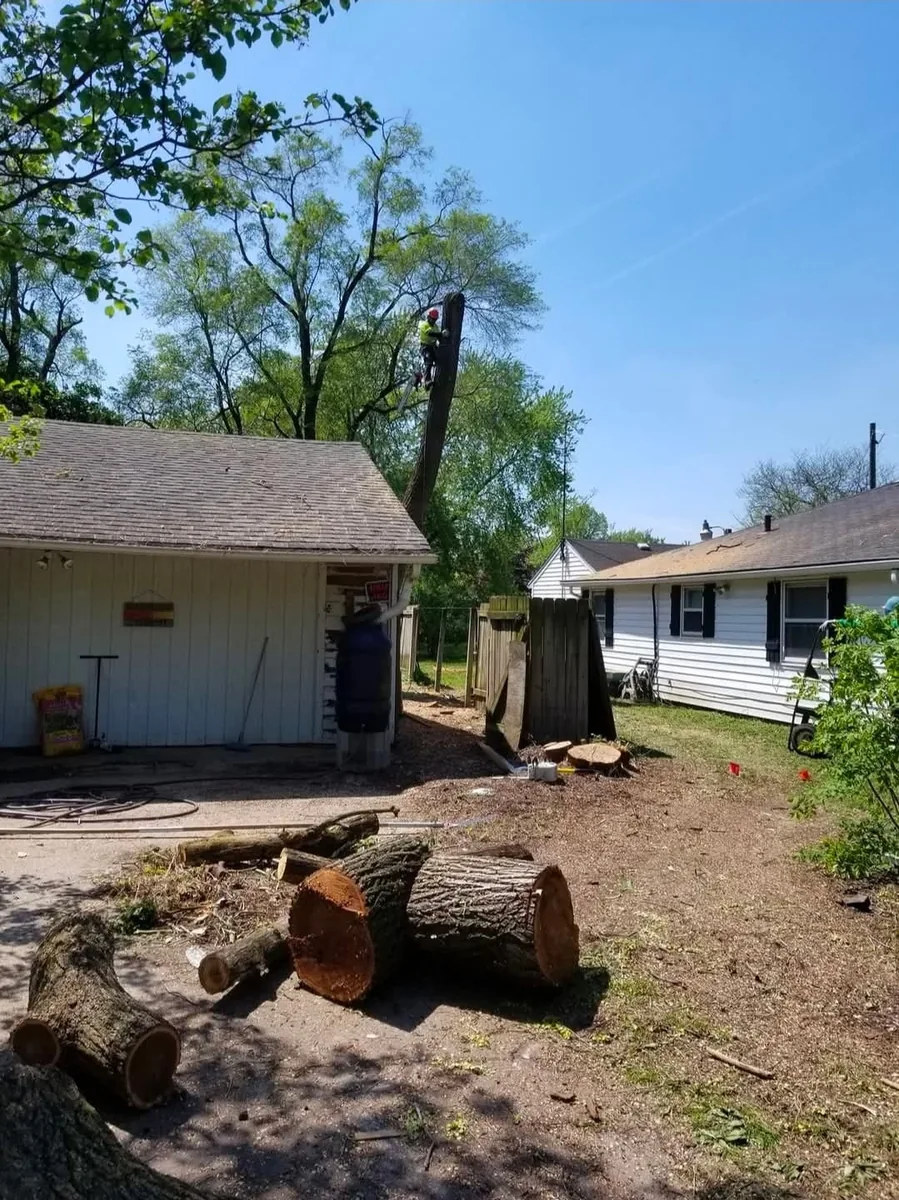
Tree sections being cut or removed in a residential yard during planned property management.
3. Take Helpful Photos Only If It Is Safe
Sharing a few clear photos from your phone when requesting an estimate can provide helpful initial context. If you choose to take photos:
- Take wide-angle photos from ground level showing the entire tree and its relation to your house, driveway, or fence.
- Take a medium shot showing the base of the trunk and ground area.
- Take photos showing access points such as side gates or driveways.
Safety Reminder: Photos are completely optional and never replace an in-person walk-through. Never climb ladders, enter unstable storm-damaged areas, or approach electrical hazards just to take a photograph.
4. Note Property Access Points and Constraints
Tree care requires moving crew members, hand tools, cutting equipment, and debris across your property. Mentioning access conditions ahead of time can make the walk-through and subsequent work much smoother:
- Gates and Pathways: Note whether side gates are locked and whether pathways have stairs, narrow passages, or steep inclines.
- Driveway & Parking: Mention if your driveway is shared, steep, or typically occupied by parked vehicles during work hours.
- Pets & Family: If pets, locked gates, vehicles, or other access conditions may affect the walk-through, mentioning them ahead of time can make the visit easier.
- Underground Features: If known, mention the general location of septic tanks, drain fields, or shallow irrigation lines near the work zone.
5. Prepare Questions About the Proposed Scope of Work
An estimate is your opportunity to understand exactly what work will be performed. Preparing a few thoughtful questions ensures you and the contractor are fully aligned before work begins:
- What specific tree work is included in the proposed scope?
- Which specific trees or branches does this proposal cover?
- Is tree removal the only viable option, or could selective pruning achieve the goal?
- How is the proposed work expected to be completed on this specific site?
- Is debris chipping, wood removal, and ground cleanup included in the estimate?
- What areas of the yard or driveway will need to remain clear during work?
- If the estimate has a validity period, how long is the quoted price guaranteed?
6. Mention Nearby Structures, Fences, and Property Constraints
Trees often grow close to residential boundaries and structural improvements. During the walk-through, point out any nearby features:
- Houses, detached garages, sheds, decks, and greenhouses.
- Fences, retaining walls, paved patios, and decorative garden borders.
- Underground utilities or overhead service drops.
Property Boundary Note: If a tree is near a property line, share what you know about the location, but do not treat the tree-service estimate as a legal survey or ownership determination. Tree service contractors provide work estimates based on homeowner requests; they do not resolve boundary disputes or make legal property ownership rulings.
7. Know When the Situation Is Too Urgent for a Routine Estimate
While most tree maintenance and planned removals can be scheduled as routine estimates, certain situations require urgent attention:
- Trees already fallen on structures or vehicles: Follow our step-by-step emergency instructions in What to Do Immediately When a Tree Falls on Your Property.
- Large broken branches suspended in the canopy: Unstable hanging limbs can drop without warning; keep people and pets away from the ground beneath.
- Electrical Infrastructure Contact: If tree material is contacting electrical infrastructure, stay away and follow the serving electric utility's safety instructions before treating the situation as a routine tree-service estimate.
- Urgent Storm Response: For active storm hazards, learn about our 24/7 emergency tree service.
Questions to Ask During a Tree Service Estimate
Consumer publications from university extensions, including Purdue University Extension and University of Missouri Extension, recommend organizing questions into four key categories:
Work Scope Questions
- Which trees/branches are included?
- Is selective pruning an alternative?
- What clearance goal is included in the proposed scope?
Property Access Questions
- What yard access will the crew need?
- Will driveways need to be kept clear?
- Are there sensitive lawn areas to protect?
Debris & Cleanup Questions
- Is wood chipping and hauling included?
- Will large logs be removed or left on site?
- What level of ground rake-up is provided?
Verification & Schedule
- Is the contractor registered in Washington?
- How long is the written quote valid?
- What should be moved before the crew arrives?
What Should a Tree Service Estimate Help Clarify?
A clear estimate or written proposal ensures both the homeowner and the tree contractor have the same expectations before any work starts. A comprehensive proposal typically clarifies:
- Designated Trees: Exact identification and location of the trees or branches to be worked on.
- Service Type: Clear definition of whether the work is full tree removal, branch pruning, or clearance trimming.
- Debris Handling: Specification of whether cut wood is hauled away, chipped into mulch, or cut into firewood lengths for homeowner use.
- Project Total: The complete estimated cost for the specified scope of work.
Pricing Note: The cost of tree work can vary based on the requested scope and site-specific conditions, such as the amount of work being discussed, tree location, property access, nearby structures, the number of trees or branches involved, and debris handling when included.
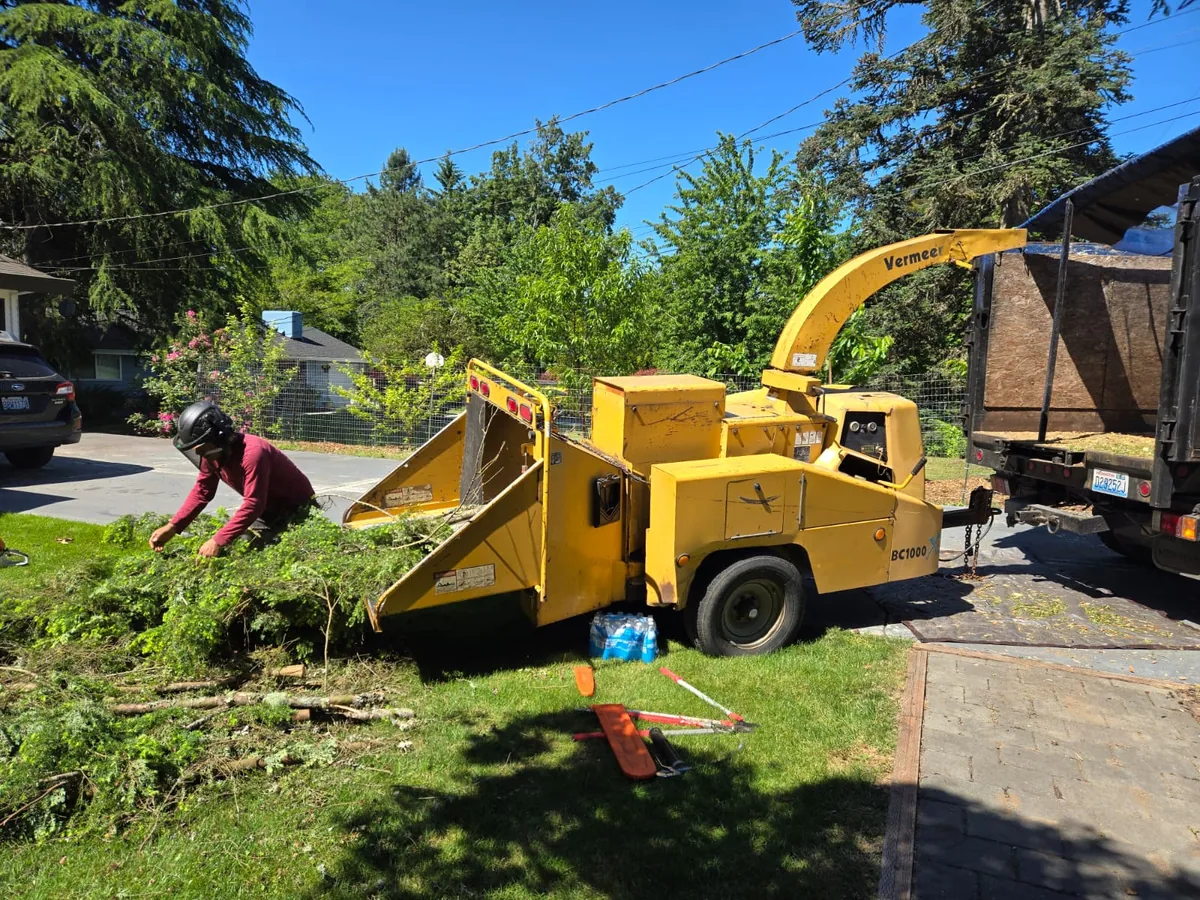
Wood chipper and tree material at a residential work site during debris processing.
Pre-Estimate Preparation Checklist for Homeowners
Use this simple checklist as helpful preparation before your on-site estimate:
Helpful Preparation Checklist
- Identify the tree or work area: Know which specific trees or branches you want to discuss.
- Clarify the requested goal: Decide whether your goal is tree removal, clearance trimming, or selective pruning.
- Note property access conditions: Note gate locations, narrow passages, driveway availability, or yard slopes.
- Prepare your questions: List key questions about work scope, debris removal, and cleanup.
- Take optional ground photos: Gather wide-angle ground photos if helpful, staying safe at all times.
- Mention nearby structures: Point out houses, fences, sheds, patios, and landscaping in the work area.
- Report power line hazards: If branches touch power lines, contact your electric utility before scheduling tree work.
- Share access details: Mention pets, locked gates, or parked vehicles that may affect the walk-through.
Ready to Discuss Your Tree Service Needs?
Just For Trees LLC offers free estimates for homeowners in Renton and surrounding service areas. Call (253) 553-8953 or contact us online to discuss the tree work you would like addressed. You can also explore our complete range of residential tree services.
Key Takeaways for Homeowners
- Preparation Saves Time: Clearly identifying the tree and knowing your goals helps ensure a productive walk-through.
- Safety First: Never climb trees, use ladders, or touch power lines to inspect branches or take photos.
- Clarify the Scope: Ensure the estimate specifies the exact trees, service types, and debris cleanup included.
- Ask Questions: Discuss pruning alternatives, property access, and scheduling during the on-site visit.
- Estimates Are Exploratory: An estimate is a practical discussion of requested work and pricing, not a legal survey or clinical arborist diagnosis.
Sources & Consumer Tree Care Resources
- Purdue University Extension: Hiring an Arborist or Tree Care Company (FNR-FAQ-13-W). Available at: https://www.extension.purdue.edu/extmedia/FNR/FNR-FAQ-13-W.pdf
- University of Missouri Extension: Selecting a Tree Care Service: What Homeowners Should Know (G6830). Available at: https://extension.missouri.edu/publications/g6830
- Washington State Department of Labor & Industries (L&I): Verify a Contractor, Tradesperson or Business. Available at: https://www.lni.wa.gov/licensing-permits/contractors/hiring-a-contractor/verify-a-contractor
- Puget Sound Energy (PSE): Tree Pruning & Electric Safety Guidelines. Available at: https://www.pse.com/en/pages/customer-safety/electric-safety